
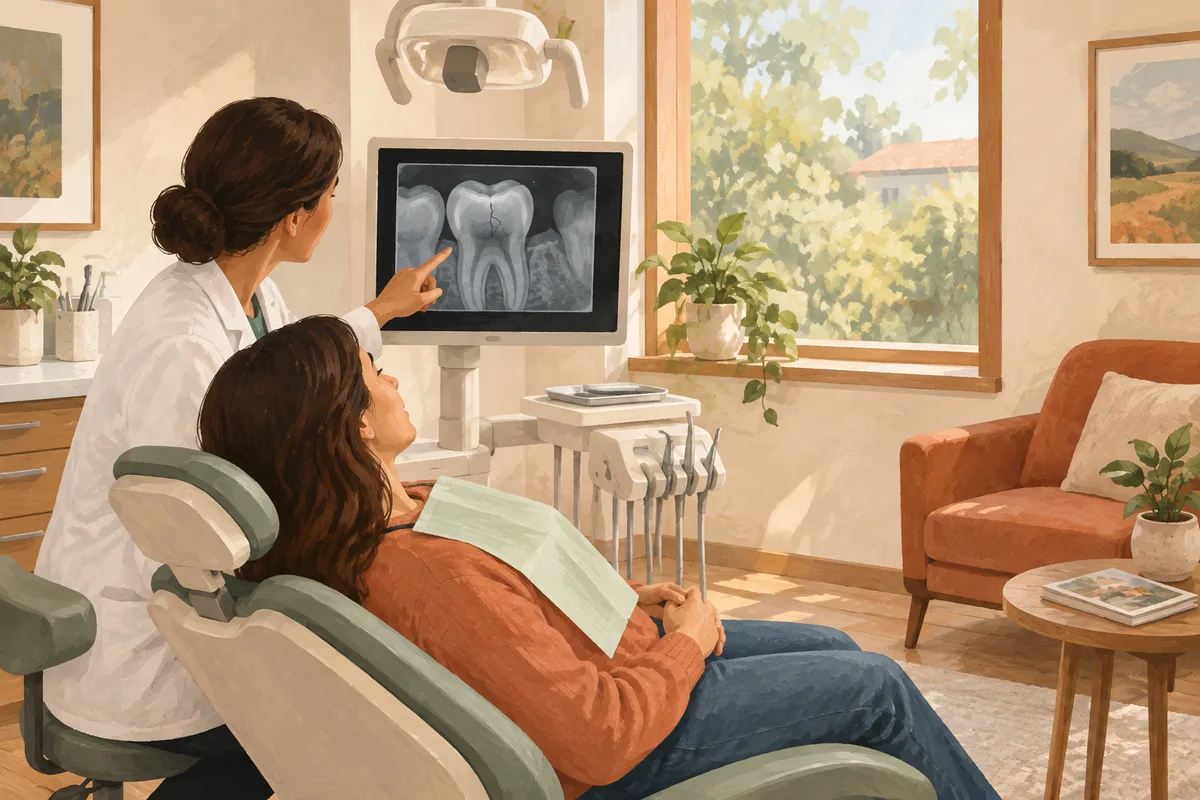
Cracked Tooth Syndrome: Why That Mystery Tooth Pain Might Not Show Up on an X-Ray
Why cracks can be difficult to find
A cracked tooth may hurt when you bite or release pressure, or react to cold. Symptoms can come and go, making it difficult to identify which tooth is responsible. Some cracks are too narrow or oriented in a way that does not show clearly on a routine X-ray.
A normal-looking X-ray therefore does not rule out a crack. Other problems, including decay, a damaged filling or inflamed pulp, can cause similar symptoms and need to be considered.
How dentists investigate
Your dentist may use bite testing, light, magnification, gum measurements and temperature tests alongside imaging. Describe what triggers the pain and how long it lasts. The location and depth of a crack help determine whether the tooth can be restored.
Treatment may involve a restoration or crown to protect the tooth. If the pulp is irreversibly damaged, root canal treatment may be needed. Some deep cracks make a tooth unsuitable for saving; an examination is needed before recommending a course of action.
What to do while waiting
Avoid chewing hard foods on the painful side and arrange a dental visit. Do not repeatedly test the tooth by biting hard objects. Seek prompt help for swelling, fever or worsening pain; difficulty breathing or swallowing requires emergency medical care.
Questions about your own care? The team at Silverlake Dental Group is happy to help — call us at 323-922-6016 or request an appointment.
This content is for general information only and isn't dental or medical advice. Talk with a qualified provider about your own situation. If you have a medical emergency, call 911.