
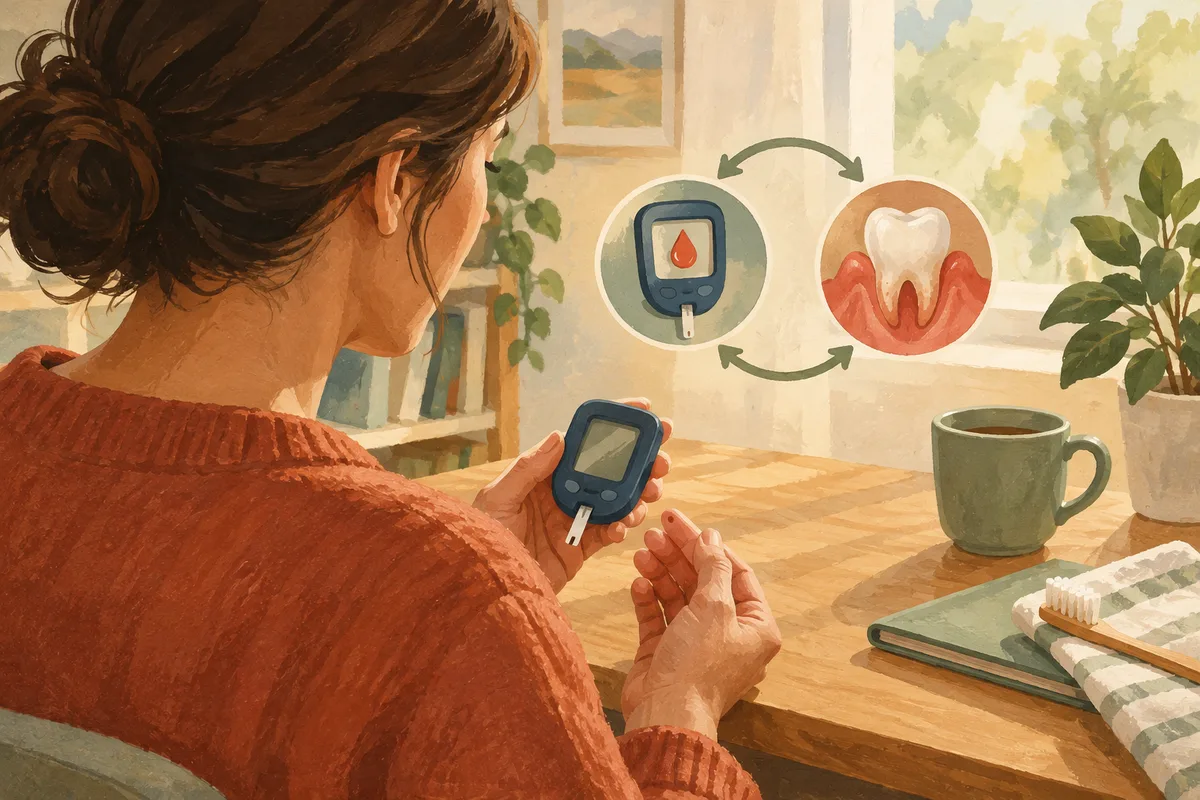
Diabetes and Gum Disease: A Two-Way Relationship
Diabetes and gum disease may seem like separate health concerns, but they are closely connected. Diabetes affects how the body manages blood sugar. Gum disease involves inflammation and infection in the tissues that support the teeth. When one condition is harder to manage, it can create challenges for the other.
This two-way relationship does not mean that everyone with diabetes will develop gum disease, or that gum disease causes diabetes. It means that mouth health and overall health deserve attention together. Understanding the connection can help patients recognize changes, share useful information with their care teams, and make dental care part of their diabetes care.
How Blood Sugar Can Affect the Gums
Plaque is a sticky film of bacteria that forms on teeth. When it builds up near the gumline, it can trigger inflammation. Early gum inflammation, called gingivitis, may cause redness, swelling, or bleeding. More advanced gum disease, called periodontitis, damages the tissues and bone that hold teeth in place.
When blood sugar stays high, the body may have more trouble fighting infections and repairing damaged tissue. This can make it easier for gum problems to develop or become more serious. Some people with diabetes also experience dry mouth, which can add to oral health concerns because saliva helps protect the mouth.
Blood sugar is only part of the picture. Smoking, plaque buildup, and other health factors can also affect gum health. Having diabetes makes regular attention to the gums especially important, even when the mouth feels comfortable.
How Gum Inflammation Can Affect Blood Sugar
Inflammation is part of the body's response to infection or injury. With periodontitis, that response can continue over time. Ongoing gum inflammation may make it harder for the body to use insulin effectively. Insulin is the hormone that helps move sugar from the blood into cells for energy.
As a result, significant gum disease can make blood sugar management more difficult. Treating gum disease may help support blood sugar management for some people, but the response varies. Dental treatment does not replace diabetes medication, medical visits, food choices, or other parts of a person's care plan.
The goal is not to blame one condition for the other. It is to recognize that addressing gum inflammation and managing diabetes are connected parts of caring for the whole person.
Signs That Deserve Attention
Gum disease does not always hurt, especially in its early stages. Possible signs include gums that bleed during brushing, persistent bad breath, swelling, gums pulling away from the teeth, or teeth that feel loose. A change in how the teeth fit together can also deserve attention. These changes can have different causes, so a dental exam is needed to understand them.
Brushing twice a day with fluoride toothpaste and cleaning between the teeth each day help reduce plaque. Dental visits allow the gums to be checked for changes that are difficult to spot at home. The timing of those visits and any needed treatment depend on a person's dental findings and health history.
New or worsening symptoms should not be ignored while waiting for blood sugar to improve. Rapidly increasing swelling, fever, or trouble swallowing or breathing needs urgent medical attention.
Why Medical and Dental Care Belong Together
Useful conversations go both ways. Patients can tell their dental team about diabetes, medications, recent blood sugar concerns, and changes in their health. They can also tell their medical team about bleeding gums, diagnosed gum disease, or dental treatment. Sharing information helps both teams understand the bigger picture without assuming that one condition explains every symptom.
For families in Silver Lake, Los Angeles, Silverlake Dental Group provides family and specialty dental care. Personal questions about diabetes, gum symptoms, or preparing for a dental visit are best discussed by calling the dental or medical team. Keeping both teams informed supports a coordinated approach, with attention to the mouth as well as overall health.
Questions about your own care? The team at Silverlake Dental Group is happy to help — call us at (323) 922-6016 or request an appointment.
This content is for general information only and isn't dental or medical advice. Talk with your dentist or orthodontist about your own situation. If you have a medical emergency, call 911.