
Digital Scans vs. Dental Impressions: What Changes for the Patient?
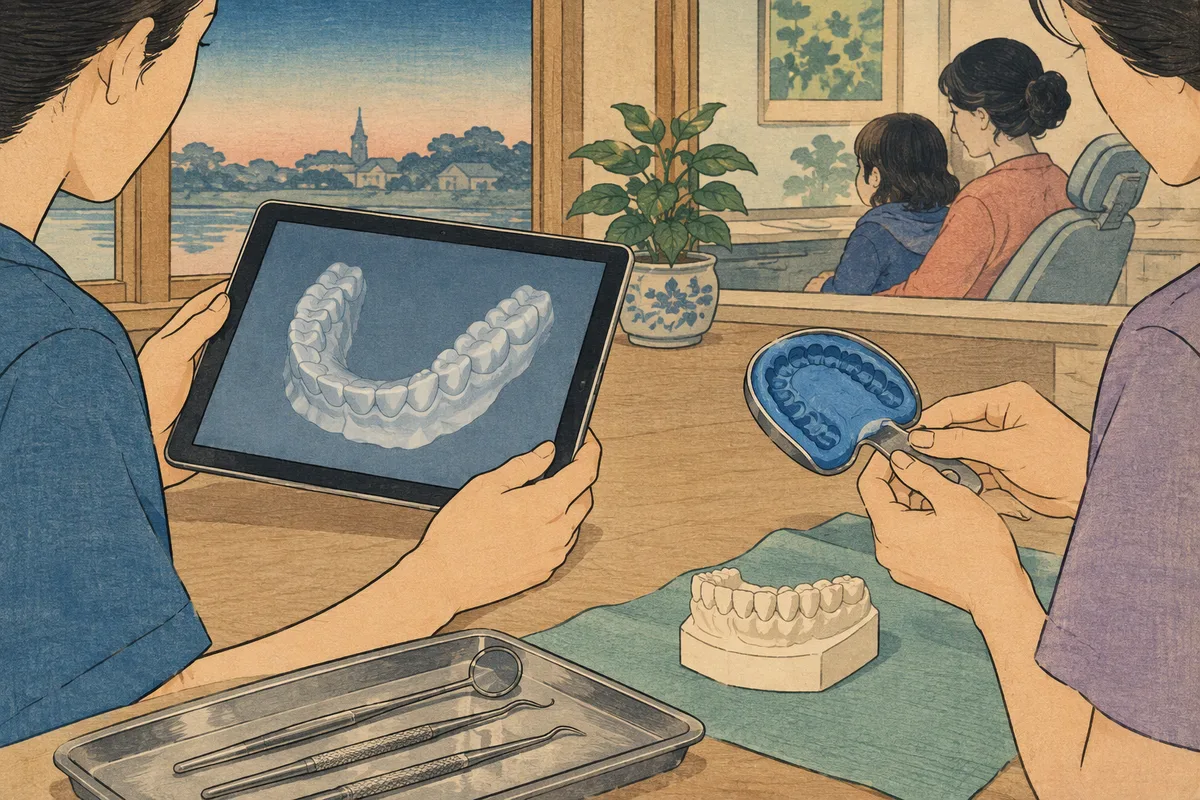
When a dentist needs a record of the shape of your teeth and gums, there are two common ways to get it. A digital scan uses a handheld wand to build a three-dimensional image on a screen. A conventional impression uses a tray filled with soft material that sets around your teeth and gums, leaving a mold when the tray comes out.
Both methods aim to capture the shapes the dentist needs for the next step in care. What changes for you is what you feel in the chair, how the dentist checks the detail, and what happens if a small spot doesn’t come through clearly.
What each method feels like
During a digital scan, the dentist or a member of the dental team moves a wand along the tops, sides, and backs of your teeth. The wand may touch your teeth or brush the inside of your cheek. There’s no tray of material to hold in place while it sets, which some people find easier, especially if a full tray makes them gag. The wand still needs room to reach the back teeth, so you may be asked to open wider for part of the scan.
For a conventional impression, a tray holds soft material against the teeth and nearby gums. You might notice pressure, a feeling of fullness, or the taste of the material. The tray stays still until the material sets, then comes out with the shape of the area it covered. If you need a break or are worried about gagging, it helps to say so before either procedure begins.
How the dentist checks the details
As a digital scan builds on the screen, the dentist can turn the image and zoom in. That makes it possible to check whether a narrow edge of a tooth or a spot near the gumline is clearly visible. The wand can only record surfaces it can see, though. Saliva, movement, or gum tissue can get in the way, so the area may need to be dried or checked from another angle.
With a conventional impression, the soft material flows around the surfaces being recorded, then keeps their shape as it sets. Once the tray is out, the dentist can look for bubbles, tears, or spots where the material didn’t reach. Both methods can capture fine detail. The key is whether the details that matter for the next step are clear enough to use.
What happens if one spot is missing?
Say the scan shows most of your teeth clearly, but there’s a gap in the image behind a back tooth. The dentist can often pass the wand over just that spot and add the missing detail to the image. If a larger area is unclear or the parts of the scan don’t line up correctly, more of the scan may need to be repeated.
A conventional impression is different because the material has already set by the time the dentist checks it. If a bubble covers an important part of a tooth, the dentist may need to take a new impression rather than patch the old one. A small flaw doesn’t always mean starting over: what matters is where it is and whether that area is needed.
Why conventional impressions still have a place
A digital scan isn’t the right tool for every job. For some dentures, for example, the dentist needs to record the shape of soft tissues and how they move near the edges of the denture. A tray and impression material can help capture those shapes as you move your lips or cheeks. In other cases, the choice may come down to which method can best reach and record a particular area.
If an impression or scan comes up during a visit, a useful question is what the dentist needs to capture and why that method suits the task. Silverlake Dental Group provides family and specialty dental care in Silver Lake, Los Angeles. If you have a personal question about what to expect at a visit, you can call the office to ask.
Questions about your own care? The team at Silverlake Dental Group is happy to help — call us at (323) 922-6016 or request an appointment.
This content is for general information only and isn't dental or medical advice. Talk with your dentist or orthodontist about your own situation. If you have a medical emergency, call 911.