
What Acid Reflux Can Do to Teeth—even Without Heartburn
Most people think of acid reflux as a burning feeling in the chest after a meal. But reflux doesn’t always cause heartburn. When stomach contents travel back up far enough to reach the mouth, the acid can wear away the hard outer layer of the teeth, called enamel. That wear can build slowly, without an obvious clue that acid is reaching the teeth.
A dentist may notice the changes before you feel any sensitivity. The location and shape of the wear can help a dentist figure out what might be causing it, but tooth wear alone can’t tell you whether you have reflux.
How stomach acid wears away enamel
Stomach acid helps break down food. When it reaches the mouth, it can dissolve minerals from the surface of the teeth, making enamel softer for a time. Saliva helps wash away and neutralize acid, and it can help replace some minerals in softened enamel. But with repeated acid exposure, the enamel can gradually get thinner. Once enamel has worn away, it doesn’t grow back.
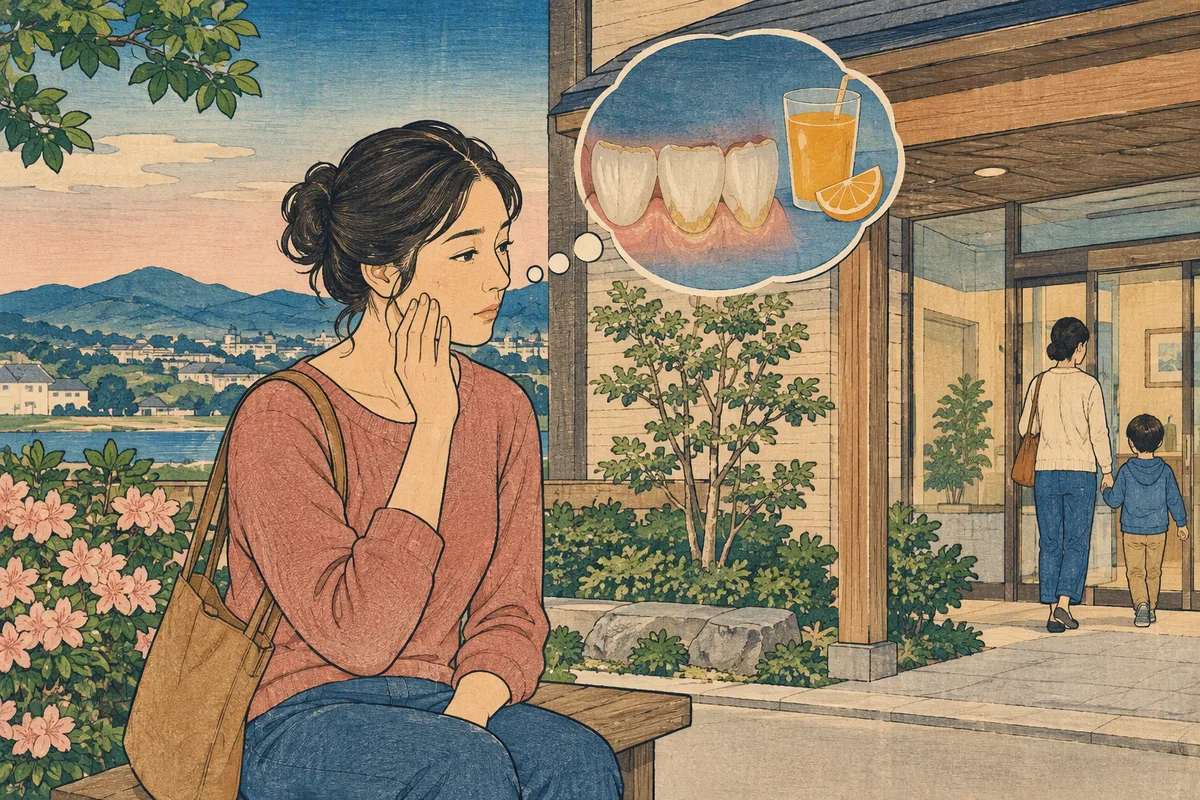
This kind of wear is called dental erosion. It’s different from a cavity, which develops when bacteria in the mouth make acid that damages a tooth. As enamel thins, the layer underneath can start to show through, making teeth look more yellow. Some people also notice that cold drinks or sweet foods cause a sharp twinge, while others don’t notice a change.
What a dentist may notice
One clue is wear on the tongue-facing surfaces of the upper front teeth. That’s a place stomach acid can reach as it comes up into the mouth. A dentist may also see small, smooth dips on the chewing surfaces of back teeth. If a tooth has a filling, the filling may look as though it sits a little higher than the enamel around it because the tooth surface has worn down.
The pattern is a clue, not proof. Frequent exposure to acidic drinks can also erode enamel, and grinding can wear teeth down in a different way. Sometimes more than one kind of wear is present. Looking at which surfaces are affected, asking about everyday habits, and checking for changes over time can help a dentist sort out what may be happening.
Why protecting teeth can take two kinds of care
A dentist can check how much enamel has worn away, watch for further changes, and discuss ways to protect the remaining tooth surface or manage sensitivity. But dental care doesn’t stop stomach contents from coming back up. If reflux is a possible source of the acid, a physician can evaluate that possibility, even when there’s no heartburn.
It can help to tell your physician what your dentist saw and where the wear was found, rather than simply saying your teeth are sensitive. It’s also useful to let your dentist know about any reflux symptoms or care you’re already receiving. The dental and medical sides answer different questions: what’s happening to the teeth, and what might be bringing acid into the mouth.
Gentle ways to care for teeth after acid exposure
After a known episode of reflux that reaches the mouth, rinsing with plain water can help wash away acid. It’s better to wait before brushing rather than scrub while the enamel surface is still softened. Regular brushing with a soft-bristled toothbrush and fluoride toothpaste supports dental health, but it doesn’t replace enamel that has already worn away.
If you have personal questions about new sensitivity or changes in the shape or color of your teeth, it’s reasonable to call your dentist, even if you’ve never felt heartburn. At Silverlake Dental Group in Silver Lake, Los Angeles, tooth wear is a topic you can bring up during a dental visit, whether you’ve noticed a change yourself or are asking about something your dentist found.
Questions about your own care? The team at Silverlake Dental Group is happy to help — call us at (323) 922-6016 or request an appointment.
This content is for general information only and isn't dental or medical advice. Talk with your dentist or orthodontist about your own situation. If you have a medical emergency, call 911.