
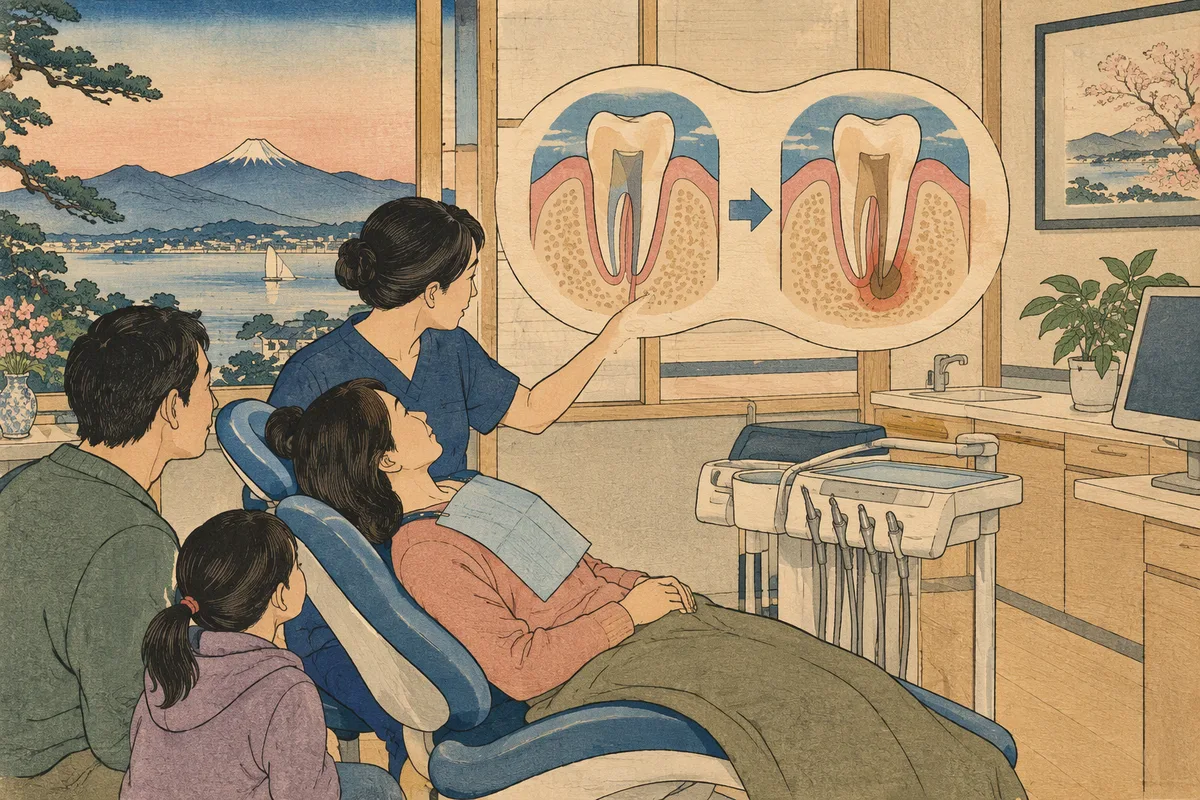
Why a Tooth Can Need Treatment Again After a Root Canal
A tooth that felt fine for years after a root canal can start to hurt when you bite. Or a dentist may notice a change near the root on an X-ray before you feel anything at all. A new problem does not necessarily mean the original treatment was done poorly, and it does not automatically mean the tooth needs to come out.
The first step is to find out where the problem is. A dentist looks at the inside of the tooth, the filling or crown that protects it, and the bone and gum around the root. The findings help narrow down whether the tooth needs another procedure and whether it can still be saved.
How problems can return years later
During a root canal, the dentist cleans and seals narrow spaces inside the tooth called canals. Some teeth have an extra canal that is hard to see or reach. If a canal goes untreated, bacteria may remain inside it. Over time, that can lead to inflammation or infection in the tissue around the root.
Bacteria can also get in after treatment. New decay can form at the edge of a crown or filling. A restoration can also loosen or crack, leaving a small gap in its seal. Dentists call this leakage. Even if the crown looks fine from the outside, a gap at its edge can let bacteria reach the inside of the tooth.
What a dentist looks for
Pain when chewing, swelling, or a small bump on the gum can be signs of trouble near a root. But those signs do not tell you the cause on their own. A cracked tooth, a problem with the bite, or even a nearby tooth can cause similar discomfort. And because the tissue around the root can still feel pressure and pain, a tooth can hurt even after the nerve inside it has been removed.
A dentist may check the bite, examine the edges of the crown or filling, and look for changes in the bone on X-rays. Not every crack or missed canal is easy to see, so the dentist weighs the exam and images together. How much healthy tooth remains and how well the surrounding bone and gum support it also matter.
When repeat treatment or surgery may help
If the problem appears to be inside the canals and the tooth is strong enough to restore, repeat root canal treatment may be an option. This is called retreatment. The dentist reopens the tooth, removes the old root filling, and cleans and seals the canals again. If there is a missed canal, retreatment gives the dentist a chance to clean it. The tooth also needs a sound filling or crown to protect it from bacteria getting in again.
Endodontic surgery takes a different route. In a procedure called an apicoectomy, the dentist reaches the root through the gum, removes the tip of the root, and seals the canal at that end. Surgery may be considered when a problem persists near the root tip and reopening the tooth from above is difficult. It cannot fix a leaking crown or make a badly cracked root sound.
When removing the tooth may make more sense
A tooth may not have enough healthy structure left to hold a new crown. A crack that runs down the root or a major loss of supporting bone can also make the tooth hard to keep. In those cases, extraction may make more sense than treating an infection in a tooth that is unlikely to hold up to chewing.
One useful question to ask is whether the proposed treatment addresses both the source of the problem and the tooth’s ability to hold up afterward. Those are separate questions, and the answers can help explain why one option makes more sense than another. If you have questions about your own tooth, you can call Silverlake Dental Group in Silver Lake, Los Angeles.
Questions about your own care? The team at Silverlake Dental Group is happy to help — call us at (323) 922-6016 or request an appointment.
This content is for general information only and isn't dental or medical advice. Talk with your dentist or orthodontist about your own situation. If you have a medical emergency, call 911.