
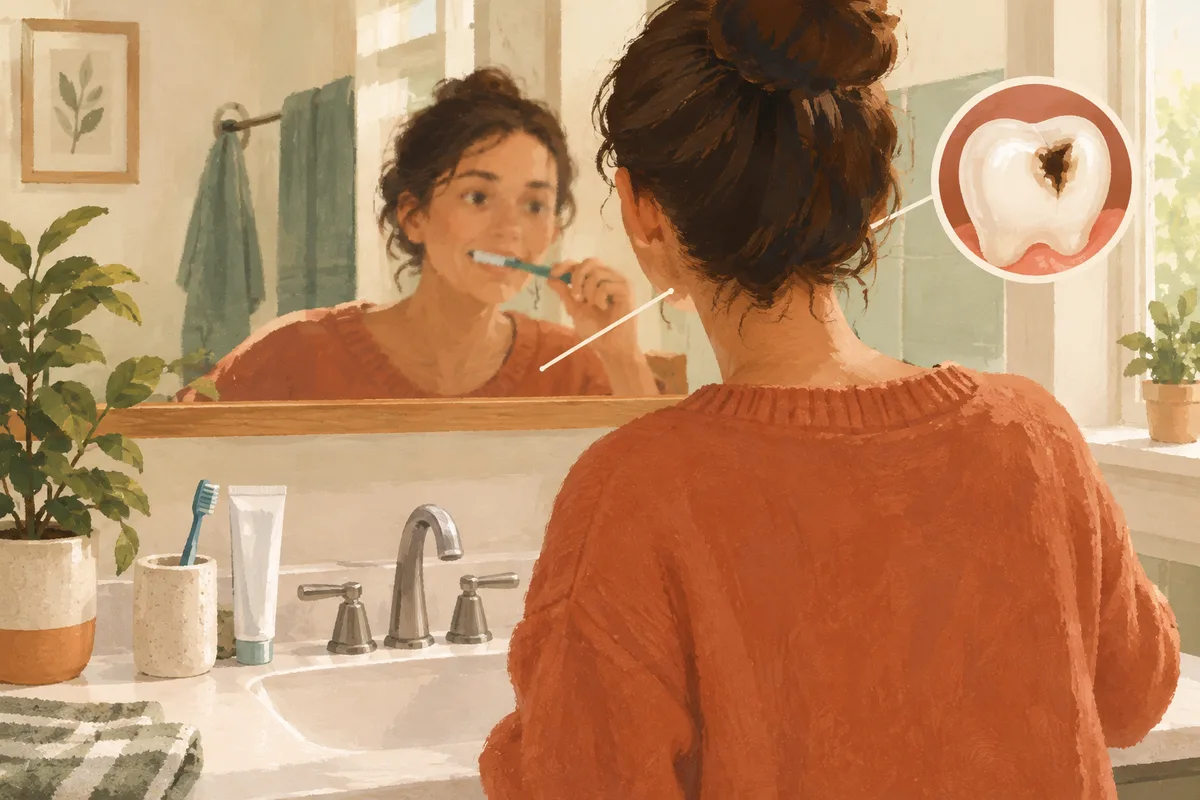
Why Some People Get Cavities Even When They Brush Every Day
Finding out you have a cavity can feel frustrating, especially if you brush every day. It is easy to wonder whether you did something wrong. But brushing is only one part of cavity prevention. Your saliva, the shape of your teeth, fluoride exposure, and how often you eat or drink can all affect your risk.
Cavities develop when bacteria in dental plaque use sugars and starches from food to make acids. Those acids pull minerals out of the tooth’s outer layer, called enamel. Saliva and fluoride help replace some of those minerals. When mineral loss repeatedly outpaces repair, decay can develop. Daily brushing helps, but it does not control every part of that balance.
Saliva Is Part of Your Teeth’s Defense System
Saliva does more than keep your mouth comfortable. It washes away food particles, helps neutralize acids, and carries minerals that support enamel. When saliva flow is reduced, acids may stay around teeth longer. That can raise cavity risk even when someone keeps up with brushing.
Dry mouth can happen for several reasons, including certain medicines, some health conditions, and treatments that affect the salivary glands. Breathing through the mouth may also contribute to a dry feeling. A sticky mouth, trouble swallowing dry foods, or waking up with a very dry mouth are worth discussing with a dental professional.
Water can help rinse the mouth and ease dryness, but it does not fully replace saliva’s protective work. Persistent dryness deserves attention rather than blame. If a medicine may be involved, the general guidance is to discuss it with the prescribing clinician rather than stop it on your own.
Tooth Shape Can Make Some Areas Harder to Clean
Teeth do not all have smooth, easy-to-reach surfaces. Back teeth often have narrow grooves and pits where plaque can collect. Some grooves are difficult for toothbrush bristles to clean thoroughly. Crowded or overlapping teeth can also make certain areas harder to reach.
The spaces between teeth are another challenge. Brushing cleans many surfaces, but bristles usually cannot fully clean where two teeth touch. Daily cleaning between teeth, with floss or another suitable tool, is an important partner to brushing. The tool and technique may vary depending on the spaces and a person’s needs.
Exposed root surfaces can also be more vulnerable to decay because they do not have the same enamel covering as the crown of a tooth. These differences help explain why two people with similar routines may develop cavities in different places. A dental exam can help identify areas that need extra attention.
Fluoride Helps Brushing Do More
Brushing removes plaque, while fluoride helps strengthen enamel against acid. Fluoride can also support the repair of early mineral loss before a hole forms. It cannot rebuild tooth structure once a cavity has created a hole.
Not every toothpaste contains fluoride. Someone may brush faithfully but miss that added protection if their toothpaste is fluoride-free. Exposure from drinking water can differ, too, depending on the water source. That means daily brushing does not necessarily mean everyone receives the same amount of fluoride.
General prevention guidance includes brushing twice a day with fluoride toothpaste. Children need age-appropriate amounts and adult supervision, especially while learning to spit. Questions about fluoride, toothpaste choices, or a child’s routine are best discussed with a dental professional who knows the patient’s situation.
Frequent Snacks Can Keep Acid Attacks Going
What you eat matters, but how often you eat matters too. Each sugary snack or sip gives plaque bacteria another chance to produce acid. Slowly sipping a sweetened drink over several hours can create repeated acid exposure, even if the total amount seems small.
Starchy foods, such as crackers, can also feed acid-producing bacteria, especially when bits linger around teeth. Sticky foods may be harder to clear away. Between meals, water gives the mouth a break from added sugar and acid. The goal is not a perfect diet; it is understanding how frequent exposure can affect teeth.
A new cavity is a reason to look at the whole picture, not a judgment about someone’s effort. Brushing habits, saliva, tooth anatomy, fluoride, and eating patterns can all play a part. Patients with personal questions about cavity risk are encouraged to call Silverlake Dental Group, which provides family and specialty dental care in Silver Lake, Los Angeles.
Questions about your own care? The team at Silverlake Dental Group is happy to help — call us at 323-922-6016 or request an appointment.
This content is for general information only and isn't dental or medical advice. Talk with a qualified provider about your own situation. If you have a medical emergency, call 911.