
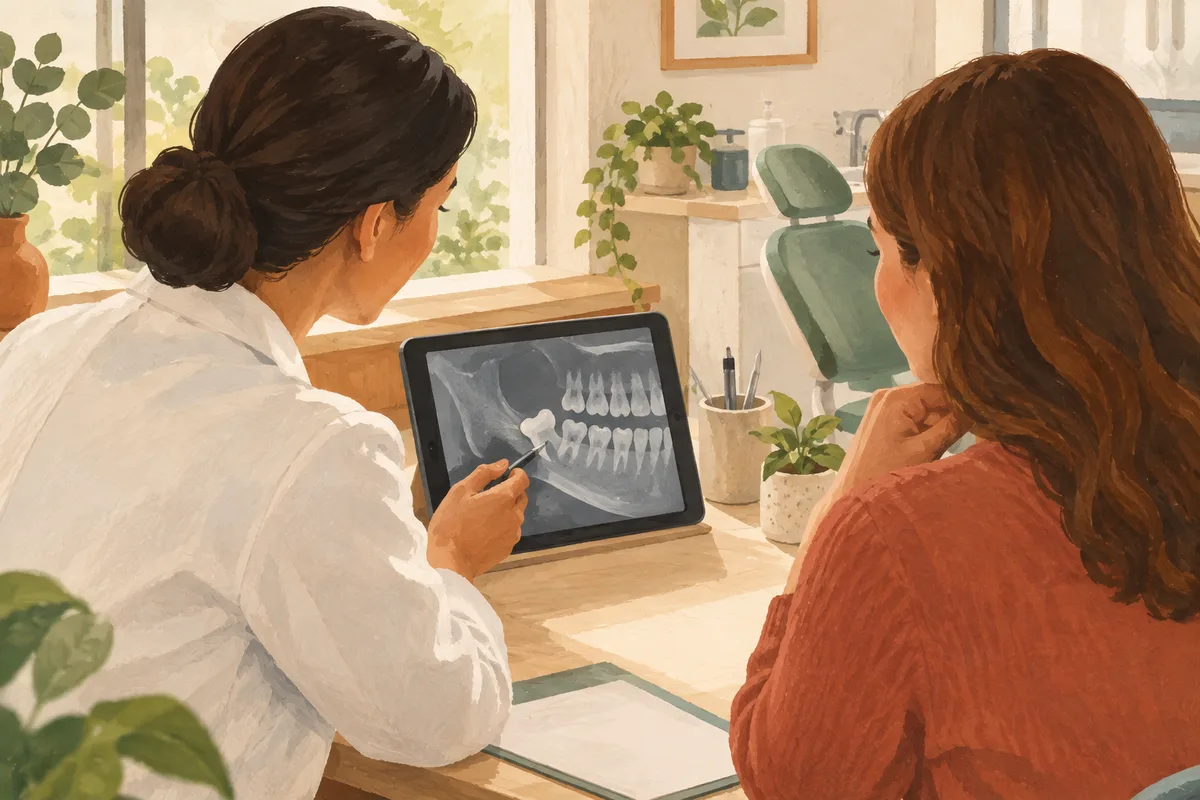
Considerations for Wisdom Tooth Extraction and Its Benefits for Oral Health
Not every wisdom tooth needs removal
Wisdom teeth are the last molars to develop. Some erupt into a useful, cleanable position; others are impacted or only partly emerge. The decision to remove them depends on symptoms, decay, gum problems, effects on neighboring teeth and the findings on examination and imaging.
Weigh the benefits and risks
Removal may address repeated inflammation, an uncleanable area, decay or other diagnosed problems. For teeth without disease, discuss monitoring alongside extraction rather than assuming removal is always required.
Possible risks include bleeding, infection, dry socket and injury to nearby nerves or other structures. The tooth’s position and your health affect the plan. Ask the surgeon what imaging shows, how difficult removal may be and which anesthesia options are suitable.
Prepare for recovery
Follow the office’s instructions about fasting, medicines and an escort if sedation is used. Afterward, follow guidance on food, cleaning and activity, and avoid smoking. Contact the office for persistent bleeding, fever or worsening pain after initial improvement. Attend recommended follow-up visits so healing can be assessed.
Questions about your own care? The team at Silverlake Dental Group is happy to help — call us at 323-922-6016 or request an appointment.
This content is for general information only and isn't dental or medical advice. Talk with a qualified provider about your own situation. If you have a medical emergency, call 911.