
iTero 3D Digital Impression Scanner
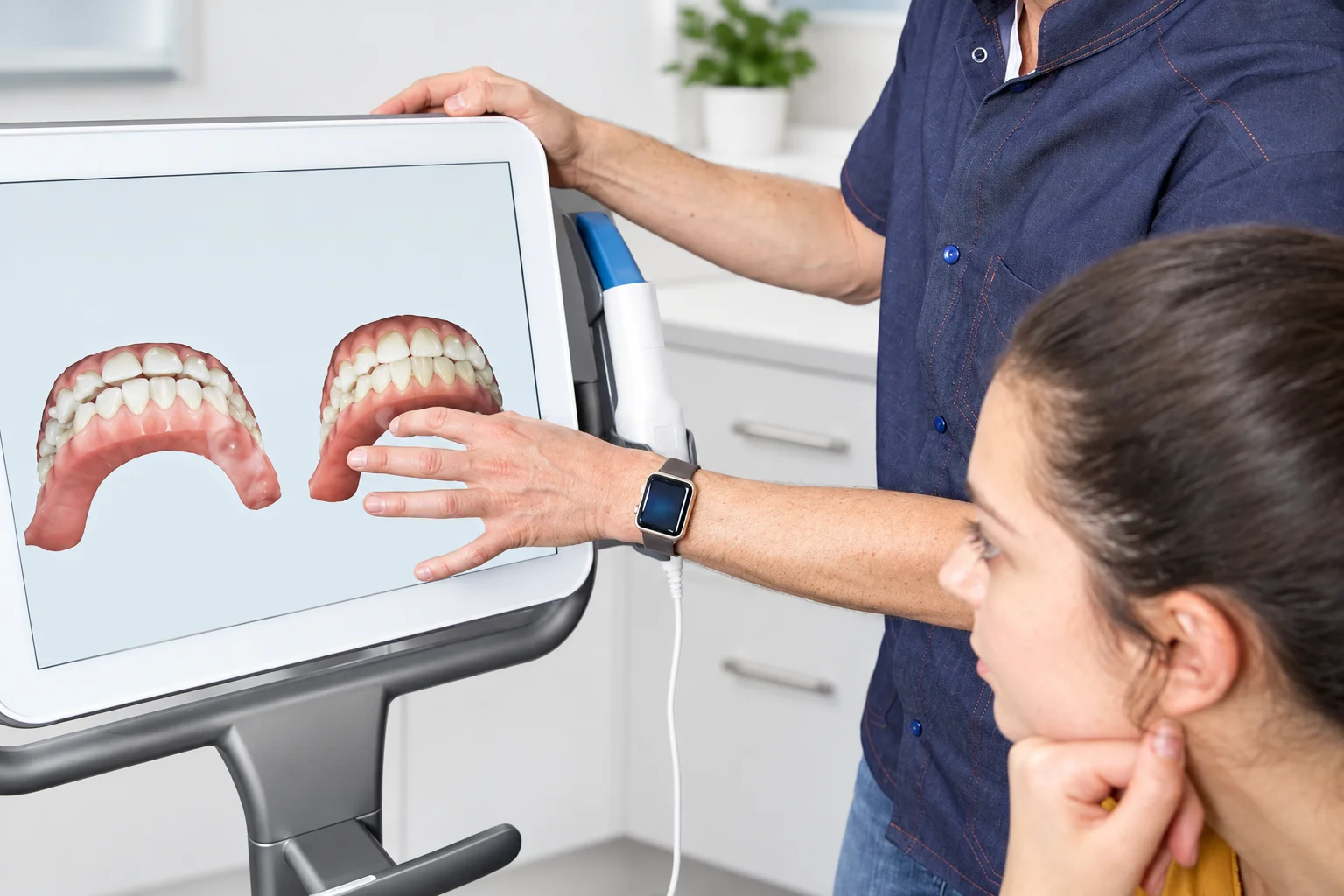
A digital model of your teeth, without impression trays
The iTero 3D Digital Impression Scanner helps Silverlake Dental Group record the shape of your teeth and bite. Instead of asking you to bite into a tray of impression material, we move a small scanner around your mouth to create a digital model. You and your dentist can review that model on a screen and use it to discuss your care.
Dr. Joshua Barkhordar uses digital dentistry to support treatment planning and the creation of selected custom appliances. A scan is one part of the assessment: your symptoms, examination, gum health, and any necessary X-rays still matter. The technology provides a useful record of tooth surfaces; it does not replace every diagnostic test.
How the scanner works
A handheld scanning wand captures images of your teeth as it moves around them. Software combines those images into a three-dimensional view. The team checks that the relevant surfaces have been recorded and can revisit an area if more information is needed. There is no tray of putty to set in your mouth, and the scan can be paused if you need a break.
The resulting model shows the contours of the teeth and the relationship between the upper and lower arches. We can use it to explain a concern, discuss a treatment plan, or provide digital information for fabrication. Because you can see what we are reviewing, it can make a dental conversation easier to follow.
How we use digital impressions
At Silverlake Dental Group, digital scanning supports Invisalign and other clear-aligner planning, selected restorations, and custom nightguards. The practice also uses in-house 3D printing when a physical model or appliance is needed. The appropriate workflow depends on the treatment: a digital scan does not mean every restoration is made in exactly the same way.
For clear aligners, the scan helps establish the starting position of your teeth. For a nightguard, it records the surfaces the appliance needs to fit. When planning restorative treatment, we combine the digital records with an examination of the tooth and surrounding structures. Your dentist explains which records are needed for your particular case.
What to expect during your visit
Tell us about a strong gag reflex, difficulty opening your mouth, or anxiety before we begin. We explain the process and position the scanner to capture the required areas. You may be asked to bite together so the team can record how the arches meet. You can request a pause at any point.
Afterward, we review the digital model and explain the next steps. You may still need additional imaging, a gum evaluation, or treatment before an appliance can be made. Ask how the scan will be used, what choices you have, and whether another appointment is required. Scanning time and the overall visit length vary with the records needed.
Common questions
Is this an X-ray?
No. An intraoral scan records visible tooth surfaces. It does not show tooth roots, bone, or hidden decay in the way dental X-rays can. Your dentist may recommend both kinds of records for different reasons.
Does a scan guarantee that aligners are suitable for me?
No. Suitability depends on your bite, the movements required, and your dental and gum health. The scan helps with planning, but an examination and a discussion of your goals are essential.
Can I see the model?
Yes. Ask the team to show you the digital view and explain the findings. It is a helpful way to understand the plan before deciding on treatment.
Discuss digital dentistry with our team
Call 323-922-6016 or request an appointment at Silverlake Dental Group. We can discuss digital impressions, nightguards, restorations, or the practice's free Invisalign scan and consultation.
This content is for general information only and isn't dental or medical advice. Talk with a qualified provider about your own situation. If you have a medical emergency, call 911.