
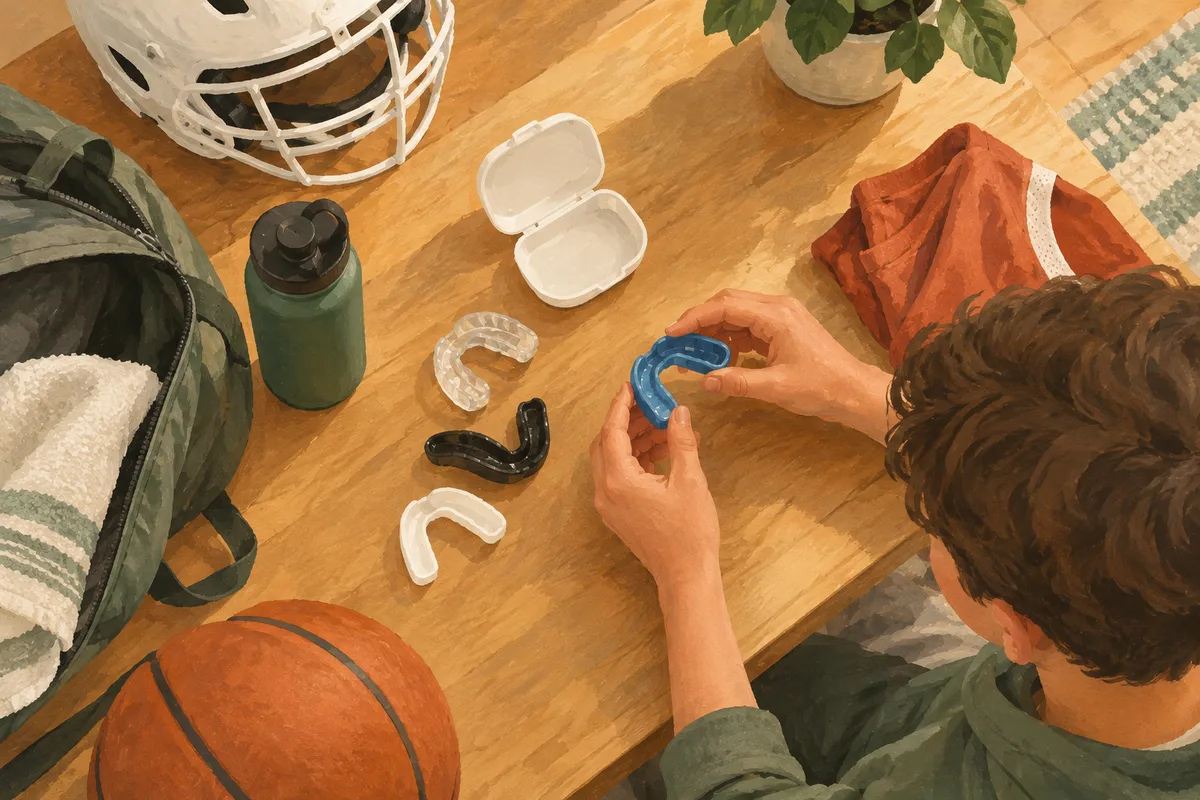
Before the Season Starts: Choosing a Sports Mouthguard That Fits
Before the first practice, most athletes check their shoes, uniforms, and equipment. A sports mouthguard deserves the same attention. It helps cushion blows that could injure teeth and the soft tissues of the mouth. But a guard that feels bulky, slips around, or makes breathing difficult may spend more time in a pocket than where it belongs.
Stock, boil-and-bite, and custom mouthguards can look similar at a glance. The biggest differences are how they fit, how they stay in place, and how well they work with a changing mouth. Choosing before the season begins leaves time to spot fit problems rather than discovering them during a game.
Stock Mouthguards: Ready to Wear, but Not Shaped to You
Stock mouthguards come preformed and are worn without molding them to the teeth. They are straightforward to find and use, but their standard shapes may not match an athlete's mouth. Even when the package lists a suitable age or size, the guard may feel loose, bulky, or uneven.
Some stock guards stay in place only when the athlete bites down. That can make talking and breathing feel awkward, especially during hard exercise. A guard should not require constant clenching to keep it from falling out. If an athlete keeps chewing it, pushing it aside, or removing it during play, the fit deserves another look.
Boil-and-Bite Mouthguards: More Adjustable, with Limits
Boil-and-bite mouthguards use material that softens when heated according to the manufacturer's directions. The athlete then shapes it around the teeth. This can provide a closer fit than a stock guard, but the result depends on the design, the size, and how carefully the instructions are followed. Products can have different heating and molding requirements.
Poor molding can leave a guard loose or uncomfortable. Too much pressure during shaping may also make parts of it too thin. A molded guard should feel secure without squeezing, rubbing, or interfering with normal breathing. Do not assume that repeated reheating will fix every problem; follow the product's limits and ask a dental professional if the fit remains uncertain.
Custom Mouthguards: Shaped for an Individual Mouth
Custom sports mouthguards are made using an impression or digital model of an athlete's teeth. Their shape can account for the person's mouth rather than relying on a standard form. This may help athletes who struggle with slipping, bulk, or uneven pressure from other guards.
A custom guard is not a permanent solution to every fit issue. Teeth can move, children grow, and dental work can change the way a guard seats. Comfort also varies from person to person. Regardless of the type, a useful guard should sit securely, allow breathing and communication, and avoid sharp edges or areas that rub. No mouthguard can prevent every sports injury.
Growing Children and Athletes with Braces Need Extra Attention
For children, fit can change as baby teeth fall out and adult teeth come in. A guard that worked last season may no longer sit correctly, even if it still looks intact. Age labels are only a starting point. The child's current teeth, mouth size, and ability to wear the guard comfortably matter more.
Braces add another consideration because brackets and wires need room, and teeth may shift during treatment. Some guards are designed specifically for braces. A standard tightly molded guard may not accommodate those changes, so athletes should ask their dental or orthodontic professional which design is appropriate rather than forcing an old guard into place.
Silverlake Dental Group provides family and specialty dental care in Silver Lake, Los Angeles, and welcomes patients from age one. Personal questions about growing teeth, braces, or mouthguard fit are good reasons to call and ask for guidance.
Check the Fit Before Play—and Throughout the Season
A guard should stay seated when the mouth is relaxed, without constant biting or support from the tongue. During a pre-season fit check, notice whether the athlete can breathe comfortably and speak well enough to communicate during play. Frequent gagging, slipping, rubbing, or removal suggests that the size or shape may not be suitable.
An athlete who cannot keep a guard in place may need a different design, not reminders to bite harder. Avoid cutting or reshaping it without appropriate guidance, since changes can affect its coverage and strength. Fit concerns are worth addressing before contact drills or competition.
Care matters, too. Follow the manufacturer's cleaning directions, let the guard dry, and store it in a ventilated case away from heat and pets. Check it regularly for tears, thinning, rough edges, or a changed fit, especially after dental changes or an impact. A mouthguard belongs in the equipment check all season, not just on opening day.
Questions about your own care? The team at Silverlake Dental Group is happy to help — call us at (323) 922-6016 or request an appointment.
This content is for general information only and isn't dental or medical advice. Talk with your dentist or orthodontist about your own situation. If you have a medical emergency, call 911.