
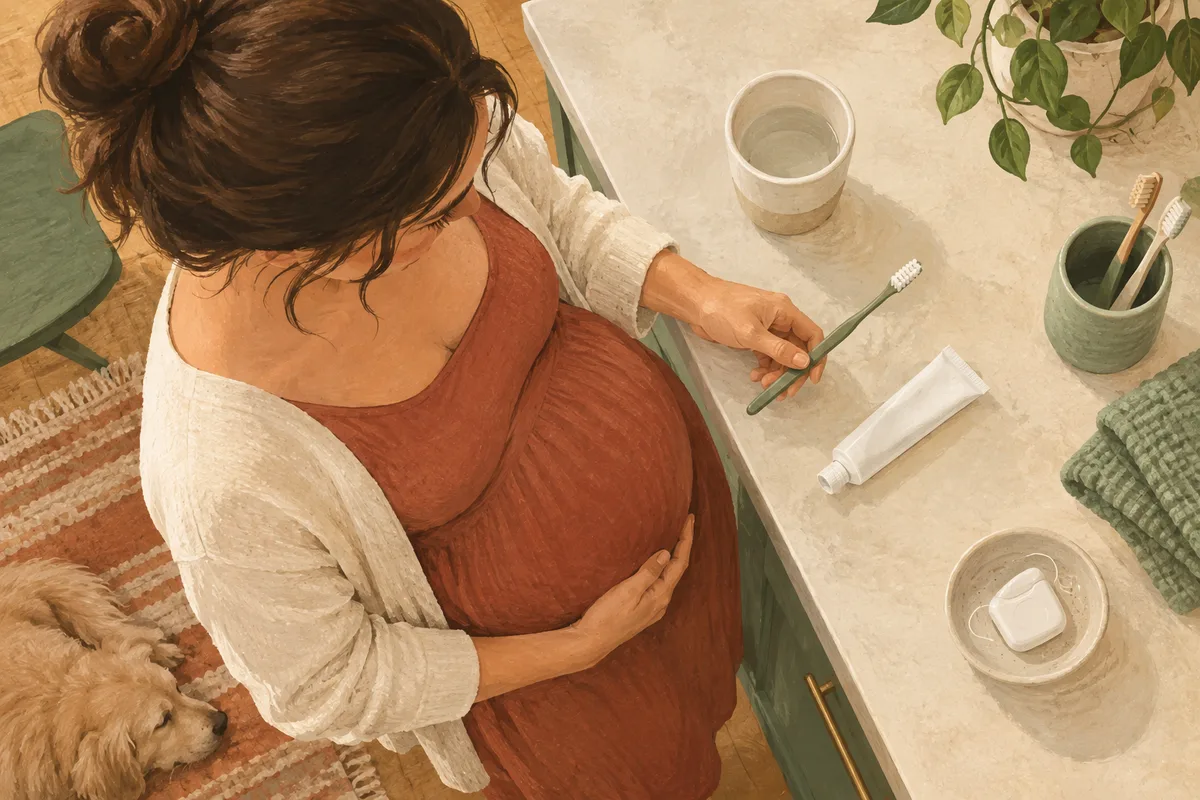
Pregnancy Changes Your Mouth, Too
Pregnancy changes more than your appetite, energy, and sleep. It can also change how your gums respond to plaque and make everyday brushing harder, especially when nausea strikes. Tender gums or a strong gag reflex may feel like one more thing to manage, but understanding these changes can make mouth care less confusing.
Pregnancy does not mean putting dental care on hold. Preventive care remains important, and problems that need treatment should not be ignored. Your dental and pregnancy care teams can help you understand what is appropriate, taking your health, symptoms, and stage of pregnancy into account.
Why Your Gums May Feel Different
Hormone changes during pregnancy can make gums react more strongly to plaque, the sticky film of bacteria that collects on teeth. Gums may become red, swollen, tender, or more likely to bleed during brushing or flossing. This inflammation is often called pregnancy gingivitis. Hormones can increase the response, but plaque still plays an important role.
Bleeding can make it tempting to skip cleaning around a sore area. However, leaving plaque in place can make irritation worse. General prevention includes gentle brushing twice a day with fluoride toothpaste and cleaning between teeth daily. A soft-bristled toothbrush can help limit irritation without giving up thorough cleaning.
Some people also notice a small, raised area on the gums during pregnancy. Any new lump, ongoing bleeding, or swelling deserves a dental evaluation rather than a guess about its cause. Pregnancy can affect the mouth, but not every mouth change is caused by pregnancy.
When Nausea Gets in the Way
Morning sickness can happen at any time of day. Vomiting brings stomach acid into the mouth, where it can soften the tooth surface for a time. Brushing immediately afterward may be too harsh on that softened surface. General guidance is to rinse with water after vomiting and wait about 30 minutes before brushing.
Even without vomiting, nausea can make the taste of toothpaste or the feeling of a toothbrush difficult to tolerate. A smaller brush head or brushing at a time when nausea is less intense may make the routine easier. If toothpaste triggers nausea, ask a dental professional about ways to keep fluoride in your routine rather than simply stopping its use.
Changes in eating patterns matter, too. Frequent snacks and sipping sweet drinks can give teeth repeated exposure to sugar. Water between meals and snacks can support mouth care. If nausea makes eating, drinking, or brushing difficult on an ongoing basis, discuss it with your pregnancy care team and dentist.
Dental Care Does Not Have to Wait
Dental exams and preventive cleanings are generally safe during pregnancy. They give a dentist a chance to check gum health, look for decay, and discuss concerns before they become more disruptive. Tell the dental team that you are pregnant, how far along you are, and whether your pregnancy care team has identified any special health concerns.
Necessary dental treatment can also be provided during pregnancy. Dental X-rays, when needed, and commonly used local anesthetics are generally considered safe. The dentist can explain why a test or treatment is recommended and consider pregnancy when choosing medicines. Share your current medications and supplements, and do not stop prescribed medicine on your own.
The second trimester may feel more comfortable for some planned care because nausea may ease and lying back may be easier. That is a comfort consideration, not a rule that all care must happen then. Tooth pain, signs of infection, or worsening swelling should be assessed promptly rather than left until after delivery.
Keep Your Care Teams Informed
Good coordination starts with sharing information. Tell your dentist about your due date, medical conditions, medications, and any guidance from your pregnancy care team. Let the dental team know if nausea, dizziness, or discomfort makes an appointment position hard to tolerate. For more complex concerns, your dentist and pregnancy care clinician may need to discuss the plan.
Silverlake Dental Group provides family and specialty dental care in Silver Lake, Los Angeles. If you have personal questions about mouth changes or dental care during pregnancy, call to discuss them rather than trying to decide from general information alone. The goal is to keep routine prevention manageable while giving symptoms the attention they need.
Questions about your own care? The team at Silverlake Dental Group is happy to help — call us at (323) 922-6016 or request an appointment.
This content is for general information only and isn't dental or medical advice. Talk with your dentist or orthodontist about your own situation. If you have a medical emergency, call 911.